Fitness & Body Composition Scanners
DXA, Bioimpedance, and the Rise of Optical 3D Analytics
The Shift to Data-Driven Fitness
In high-performance athletics and personalized fitness, the scale is an obsolete metric. Weight alone cannot distinguish between skeletal muscle mass, adipose tissue (fat), and water retention. To accurately track metabolic health and muscular hypertrophy, fitness professionals rely on advanced body composition scanners. The market is primarily divided into three distinct technologies: DXA, BIA, and Optical 3D.
Dual-Energy X-Ray Absorptiometry (DXA)
Widely considered the clinical "gold standard" for body composition, DXA (or DEXA) was originally developed to measure bone mineral density. The machine passes two very low-dose X-ray beams at different energy levels through the body. Because bone, fat, and lean tissue absorb these beams at different rates, the scanner can mathematically isolate these three compartments.
- Pros: Unparalleled accuracy in mapping regional fat distribution (e.g., separating visceral fat from subcutaneous fat).
- Cons: High equipment cost, requires a certified radiology technician, and exposes the user to a minor dose of ionizing radiation.
Bioelectrical Impedance Analysis (BIA)
BIA relies on the electrical properties of biological tissue. By sending a weak, imperceptible alternating electrical current through the body, BIA sensors measure impedance (resistance). Muscle tissue contains high water content and is highly conductive; fat tissue contains less water and resists the current.
Modern multi-frequency, segmental BIA scanners (often featuring 8-point tactile electrodes) measure the arms, legs, and trunk independently.
- Pros: Fast (under 60 seconds), radiation-free, widely available in commercial gyms, and highly effective at tracking hydration status.
- Cons: Highly sensitive to daily variables. Dehydration, recent meals, intense exercise, and even ambient room temperature can drastically skew BIA results.
Optical 3D Body Scanners
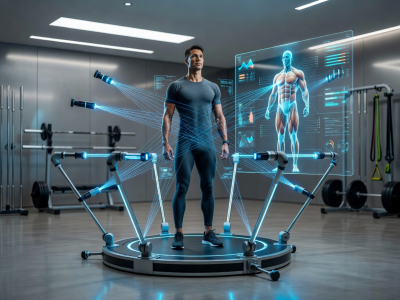
The latest entrant into the fitness space relies entirely on surface topography. Using an array of infrared depth sensors (similar to the technology found in facial recognition hardware), 3D body scanners build a millimeter-accurate digital avatar of the user.
These systems do not penetrate the skin to measure fat directly. Instead, they calculate exact bodily circumferences and volumes. They then cross-reference this geometric data with extensive machine-learning datasets (often calibrated against DXA data) to estimate body fat percentage.
| Feature | DXA | Segmental BIA | Optical 3D Scan |
|---|---|---|---|
| Primary Metric | Tissue Absorption | Electrical Resistance | Surface Volume & Girth |
| Fat Accuracy | Highest | Moderate to High | Moderate (Estimates via Volume) |
| Visual Output | 2D Density Map | Numerical Dashboard | Rotatable 3D Avatar |
| Hydration Impact | Minimal | High (Can skew results) | None |
Choosing the Right Technology
For individuals heavily focused on postural tracking, circumference changes (such as losing inches off the waist), and visual progression, Optical 3D scanners provide the most compelling feedback. Conversely, clinicians monitoring osteoporosis or severe metabolic disorders will invariably default to DXA. BIA remains the most accessible midpoint, offering rapid, numerical baseline tracking for everyday commercial gym environments.